Showing posts with label O. Show all posts

Tuesday, 7 February 2023

Obi-Wan Kenobi (2022)


Ten years after the destruction of the Jedi and the establishment of the Galactic Empire, Obi-Wan Kenobi is in hiding on the desert planet of Tatooine, where he watches over the young Luke Skywalker.

Kenobi's mission requires him to keep his head down and avoid drawing any Imperial attention.  The Empire's Jedi-hunting Inquisitors are ruthless and effective, and respond to even the faintest hint of Jedi activity.

Despite many temptations to take a stand against injustice, Kenobi refuses to abandon his charge.  Nothing is important enough to abandon Luke.  Or so he thinks.

But then word comes that the young Princess Leia Organa has been kidnapped, and - as you almost certainly already know, unless you've lived under a rock for the last four decades - Leia is every bit as important as Luke.  It seems that Kenobi will have to buckle on his light sabre for one more mission, after all.

Obi-Wan Kenobi never quite managed to make me forget that the fates of many of these characters have been thoroughly defined over the past four decades, but it is honestly about as good and exciting an adventure as it can be, given the canonical narrative straight-jacket within which it must work.  While the futures of major Star Wars characters like Obi-Wan, Leia and Darth Vader are already established, the show wisely looks to introduce new characters about whose lives and fates real tension can be established.  It also does a surprisingly deft job of allowing Kenobi to have a planet-hopping adventure that could reasonably have gone unmentioned before now.  Smart scripting work, overall, even if it can't entirely take eliminate the weaknesses from being a 'flashback' story.

The show also profits from strong central performance.  Ewan McGregor is predictably excellent as Obi-Wan, very much channelling that Alec Guinness vibe for the role; but he is well-matched by the precocious Vivien Lyra Blair as young Leia.  She's an excellent choice, believably a younger, spirited-but-still-naïve version of the character as played by Carrie Fisher.

On the villainous side, Moses Ingram does good work in the role of the Jedi-hunting 'Third Sister', slowly revealing a more complex character than her brash aggression initially suggests.  Regrettably, Ingram suffered a lot of racial abuse and death threats online over the role, which were completely unjustified and hateful, and regrettably show how many people still want Star Wars (and for that matter, other media) to go back to just being all white dudes.

Another thing I enjoyed was the show's choice to depict Owen and Beru as much more than just the querulous aunt and uncle of A New Hope. It's a nice acknowledgement that, with all that was ultimately revealed in the films, they had to be very brave to take him in.  Of course, when the original film came out, little of that context was there!  It's good to see the writers recognising that it makes sense to change their characterisation, given the way the franchise has developed since then.

On the subject of the franchise's development, I do hope to see less trading on nostalgia in the future, with Star Wars. For one thing, there's really only so much space between the lines to fill in this earlier material.  For another, a franchise that is constantly feeding on its own history like this is not growing or evolving, and will ultimately become stale.

Until then, though, Obi-Wan Kenobi is a solid show, and well worth your time if you are a Star Wars fan.  Just don't be a Star Wars fan who is also a racist dirtbag, please.

Friday, 2 July 2021

Oblivion (2013)


It is 2077.  Sixty years ago, an alien invasion wracked the Earth.  Humanity won, at the cost of leaving the planet almost uninhabitable.  The plan is for the surviving population, currently living in orbital habitats, to relocate to Saturn's moon Titan.  However, this requires vast reserves of energy.  These reserves are being gathered from huge machines on the Earth's surface.

Jack Harper is one of the handful of humans left in the Earth's atmosphere, where he works to protect the fusion generators from alien scavengers that still plague the planet.  His job is vital to the future of the human race, and yet he cannot shake a vague sense of unease about the entire situation ...

You've probably already guessed 90% of the movie's twist from the above two paragraphs, but that's okay since (a) the film's own trailers spoiled at least that much about it, and (b) a film can be entertaining even when it is completely unsurprising.

Unfortunately for Oblivion, I feel it falls rather short on the entertainment front.  The true story of what's going on doesn't make a whole lot of sense, for one thing.  For another, the antagonists' actions after the truth comes out don't seem to make a lot of sense.  They operate more on the principle of 'what will lead to a big action sequence' than 'what would actually achieve their goals'.  I like a big action sequence, as my enthusiasm for The Fast and the Furious franchise shows, but they need to come with a logical in-universe reason for them to happen.  What is 'logical' varies from film to film, of course: I forgive things in a Fast film that I would not in a more 'grounded' project like this one.

Oblivion, alas, fails to find a way to bridge the gap between its competing objectives of character drama and action spectacle.

Saturday, 3 October 2020

Oculus (2013)


11 years ago, Alan Russell murdered his wife Marie, and was then killed in self defence by his ten year old son Tim when he tried to kill his children.

Or at least, that's the finding of the police investigation.  Tim's sister Kaylie, who was 12 at the time of the killings, thinks otherwise.  She is sure that an antique mirror her father purchased somehow drove both Alan and Marie insane.  She has tracked dozens of cases of the mirror's owners meeting macabre fates, and has become an antiques dealer herself with the avowed intention of finding the mirror and getting irrefutable proof of its malign, supernatural powers.

And now, as Tim reaches his 21st birthday and is released from the mental institution where he has been treated for the past decade, Kaylie has located the mirror and is ready for the showdown.

Oculus is a well-crafted horror film, driven more by suspense and creepiness than gore or violence (though there is some of the latter).  It has a solid cast and a pretty tight script that does a good job of justifying the characters' actions, or failure to act.  "Why doesn't Kaylie just smash the mirror?" has a couple of different answers offered, for instance, and they hold water pretty well.

Well-crafted stuff, check it out if you want to be creeped out.

Tuesday, 15 October 2019

Outpost 11 (2013)


It is 1955 in an alternate, steampunk-ish world, and the "Second Hundred Years' War" rages on.  As part of the war effort, Britain has established a chain of tiny, isolated outposts in Antarctica, where they monitor enemy communications and activity.  Quite why a desolate, nigh uninhabitable wasteland would be a hotbed of military activity, I am not sure, but apparently it is. 

Outpost 11 has a staff of only three men: a nervous conscript, an angry and emotionally abusive corporal, and an officer of some kind who doesn't seem to care over much about the war or their ill-defined mission.  So there is a fair bit of tension in the place even before the red warning light of an imminent attack blinks on.  So when it does, it's safe to say that things are going to get very bad indeed.

The 'alternate history' background of Outpost 11 is to my mind a distraction from the claustrophobic sense of tension the film is trying to establish.  It would I think have been better to make this a cold war base in the 'real world' 1970s.  A lot of the eclectic mix of technology could still have been explained in that context, and I wouldn't have spent half the film wondering what on Earth Britain and Prussia could have found to fight over in 1850 that they'd still be locked in a war over a full century later (you can't, after all, have a Second Hundred Years' War until it has lasted a hundred years ...).

That quibble aside, is this any good?  Eh.  The cast is solid, but the script is a bit weak.  The characters are little more than flat archetypes, with little reason for us to care about them other than that they are on screen, and a number of the plot points don't feel 'natural' in the context of the situation, but instead like the writers forcing things to lead toward the outcomes they have in mind.

Tuesday, 14 May 2019

The Outer Limits, Season 1 (1963)


"There is nothing wrong with your television set.
Do not attempt to adjust the picture. We are controlling transmission.
If we wish to make it louder, we will bring up the volume.
If we wish to make it softer, we will tune it to a whisper.
We will control the horizontal. We will control the vertical. 
We can roll the image, make it flutter. We can change the focus to a soft blur, or sharpen it to crystal clarity. 
For the next hour, sit quietly, and we will control all that you see and hear. 
We repeat: there is nothing wrong with your television set. You are about to participate in a great adventure. You are about to experience the awe and mystery which reaches from the inner mind to... The Outer Limits."

This evocative opening narration graces every episode of The Outer Limits, an anthology science fiction show that launched in 1963.  The debt that it owes to The Twilight Zone is thus pretty clear, even before you've seen a single minute of footage, but it would be unfair to dismiss it as "just" a clone of the Zone.  The Outer Limits pursues a much more explicitly science fiction themed agenda, with most of the stories either involving an encounter with some sort of alien creature, or the development of a startling new technology and what that means for humanity.  Each episode also runs longer than most seasons of the earlier show did (though ironically, 1963 was also the one year where The Twilight Zone experimented with 50 minute, rather than 25 minute, episodes).  This extra length is not always a positive, I have to admit: several of the stories here would I think benefit from being shorter, as the pace of the show can sometimes be rather on the slow side.

If you're interested in a TV show that's canted more toward the 'science' end of science fiction, and are willing to accept that its age means it is sometimes naive or out of date in its views, then you should probably give The Outer Limits a look.  Double-check whether you're getting the original or the 1990s relaunch, though - the latter is a somewhat different beast, as best I recall it.

Friday, 28 September 2018

On the Town (1949)


Three sailors start a one-day furlough in New York determined to see the sights and find some dates.  Not necessarily in that order.  Shenanigans ensue.

That's pretty much the whole plot of this very slight Gene Kelly / Frank Sinatra musical.  It's a total marshmallow of a film, the script relying heavily on happenstance, schmaltz and the charisma of its cast to carry it along.  It can't even rely on the strength of the musical numbers, which frankly didn't do much for me.

Prehistoric Man is about as catchy as it gets.  And boy oh boy does it get offensive around the 2 minute mark.


So it's a mediocre musical with a very slight plot.  None of this stopped it from being well-received at the time of its release, mind you, but certainly it's not aged as well as say Singin' in the Rain in any metric.  If you've a hankering to visit the heyday of the musical, I'd suggest you look there rather than On the Town.

Tuesday, 10 July 2018

Orphan Black, Season 5 (2017)


The long struggle between the Dyad Corporation and its clone experiments comes to a head in this final series of Orphan Black, as Sarah and her "sisters" fight to bring down their creators and have the freedom to live their own lives.  The true leadership of the enemy and their motivations are finally made clear, and the clones, as well as everyone who knows their secret, must all decide on which side of the struggle they will stand.

For the first few episodes of this season, I felt like this final season of Orphan Black was going to be muddled and unsatisfying, with a lot of activity that wasn't actually changing the status quo, but as things went on it clicked together much better than I was expecting.  It's by no means perfect - right up until the last couple of episodes I felt like the wrong characters were driving the story - but it does come together quite nicely in the final act, giving centre-stage to the right people and successfully driving a theme of sisterhood.

While not immune to the common flaws of "big mystery" TV shows - the three most obvious being a sometimes meandering story, the sidelining of certain characters, and a number of twists that seem to exist purely to be twisty - Orphan Black ultimately succeeds in delivering a satisfying multi-year arc with a good conclusion.  And man oh man, Tatiana Maslany is a marvel in her multiple roles.  The show's practically worth seeing just for that.

Tuesday, 5 December 2017

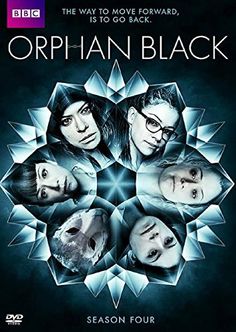
Orphan Black, Season 4 (2016)


Season 3 of Orphan Black had some issues with cohesion.  The plot-line revolving around one of the 'core four' clones felt very divorced from that of the other three.  This season does a much better job of getting all of the quartet interacting on the same things, and ironically it does so by revealing a lot more to us about a fifth clone: the dead police officer Beth, whose suicide was pretty much the opening act of the entire show.

I'm generally pretty wary of the "now let's flashback and show a bunch of stuff that happened a long time ago" as a story-telling technique, as it can often be a pretty heavy-handed and clumsy way of changing the meaning of past story events in order to correct a story that has gone off course.  In this case though, it works well: the events that are revealed generally reinforce the plot direction taken at the end of the last season.  That plot direction wasn't one I felt was all that well set-up back then, but I have to admit it was probably smarter to leap into it before doing all this flashback material, so good call by the show's writers on that front.

As always, the cast remains very strong.  Tatiana Maslany has rightly been lauded for her work on the show, but she is ably supported by pretty much everyone she works with here.  The casting is a real benefit to the show.

Fingers crossed that the fifth and final season will deliver a solid ending to what has been an enjoyable show over the past four series.

Friday, 15 September 2017

Operation: Endgame (2010)


It is the inauguration of Barack Obama, which is bad news for the black ops agency The Factory.  It's been allowed to get up to all sorts of inappropriate mischief in the previous eight years, and that's all about to come to the light of day.  Or at least, it should.  Some within the Factory are determined to ensure that their tracks are covered.  And they don't really care what they need to do in order to achieve that goal.

Apparently the original script for this film did quite well in screenwriting competitions back in 2004.  It was presumably at least somewhat different back then, what with Obama's election being several years in the future.  I wonder if it was also funnier back then, because while I did laugh a couple of times during this ostensible comedy, there was an awful lot of macho posturing type stuff that I think was supposed to be comically over the top, but didn't really work for me.  It was over the top, certainly, but I didn't find it to be so in a manner that was funny.

Things do improve once the action elements of the film kick off, as the film at least has momentum then, but it's best not too think too closely about the plot.  It's one of those complicated triple-cross things which only work if everything falls exactly into place.

There's a great cast here, of recognisable if not exactly A-list names.  I just wish they were assembled for a better film.

Tuesday, 12 September 2017

Orphan Black, Season 3 (2015)


The writers of Orphan Black seemed to have created a rod for their own backs.  By far the most engaging and entertaining of the various clone sisters in the show is the uptight soccer mom Alison, but she's also the one that's got very little to do with the whole "secret cloning/genetics experiments" storyline at the heart of the show.  Everyone else has some skill or ability that ties into this.  Cosima has the science; Helena the special forces skills; while Sarah has both street smarts and is the only clone able to have children of her own.  Alison ... well, she used to help with the finances but even if this was still necessary it's not exactly something that keeps her front and centre in the show.

What this means is that season three sometimes feels like you're watching two different programs, as most of the characters feel like they're in something like The Americans while Alison's apparently turned up to work on Weeds.  Both solid shows, but not exactly an easy mix.  The writers do what they can to generate reasons for other characters to get involved in Alison's story arc, but they can't so readily resolve the problem of the different tones.

Fortunately, the show does a better job handling its other challenge: maintaining a core mystery and moving it forward in a satisfying way.  There is one major plot twist that I don't think was entirely earned, but other than that it holds together quite nicely.  I'll certainly be checking out season four.

Tuesday, 20 June 2017

The Omega Factor (1979)


I read someone else's review of this series where they described it as "The X-Files, if it was made in 1970s Britain".  It's not a bad summation ... though not in my mind as positive a thing as that reviewer intended it to be.

Conspiracy TV - that is, shows which feature a shadowy, Illuminati-esque organisation as a largely unseen adversary - often face a fairly critical problem.  The need to keep the antagonist central to most episodes, without every allowing them to be materially defeated, often causes them to become so pervasive and powerful that the audience is left wondering how it is that they haven't already won.  When you combine this tendency with the fact that the bad guys here have access to mind control ... well, it's safe to say that The Omega Factor has this problem in spades.

Journalist Tom Crane specialises in articles regarding psychic phenomena and other wacky theories of the 1970s.  In the course of his latest round of research, he discovers that he himself has powerful, untapped psychic abilities.  This brings him to the attention of Department 7, a secret branch of the UK government that researches such matters.  And also to the attention of Edward Drexel, a malevolent psychic who - despite his power - Crane soon comes to believe is merely the pawn of a larger, sinister organisation known as "Omega".

So one catastrophic flaw that The Omega Factor suffers is the fact that Tom Crane is a terrible person.  He's hugely unlikable on any number of fronts.  His arrogant pigheadedness gets his wife killed in the first episode, and then by the third episode - barely weeks alter - he's actively pursuing a relationship with his dead spouse's best friend.  When the two of them do hook up (unlike Mulder and Scully, the sexual tension is not left to simmer), he treats her very poorly, both personally and (since they work together in Department 7) professionally.  The fact that in the context of the show, he always turns out to be right, does nothing to make him less irritating.  Quite the reverse, in fact.

Couple the jerk protagonist with the show's lack of closure - it was cancelled after one season - and tI can't see any good reason to spend time and money tracking this one down.

Tuesday, 28 February 2017

Orphan Black, Season 2 (2014)


One of the challenges facing any show driven by a core mystery / conspiracy is that it has to find a way to provide some sort of forward progress and answers, without blowing its big question.  It's a difficult line to walk.  For my money most often shows fail this task by devolving into a series of largely meaningless plot twists, losing momentum and my interest along with it.  Yes Lost, I am talking about you.

Season two of Orphan Black doesn't do a perfect job of walking the tightrope, I think.  There's a bit too much wheel-spinning activity where lots of stuff happens, but the end result of all that kerfuffle is that things are pretty much exactly where they were before it all happened; a few too many "dun dun dun!" moments that are resolved less than half an episode later.  I'm reminded in some ways of the old serials that used to play before the main feature at the cinema back in the 1930s and 1940s.  These would often consist of 10-12 twenty minute episodes, but the end of the second episode and the beginning of the second last would have the characters in exactly the same places.  This meant that you could drop all the stuff in the middle and make a movie out of the first two and last two episodes, and the story would still make sense.  So from episode 3 to episode N-2 was just filler.

Now this show doesn't quite go that far, as there is stuff that happens in each episode that advances the story in various ways, but when a character gets kidnapped by group X, then escapes, then voluntarily returns to them, then changes her mind and escapes again ... well, it does feel like at least a bit of padding is going on.

Fortunately Orphan Black has some sharp writing and a fine cast.  On the latter front, Tatiana Maslany has rightly been acclaimed for her performance as multiple characters, but I would be remiss not to also mention Jordan Javaris and Skyler Wexler, who are excellent in their supporting roles.  On the former, pretty much everything this season that involves uptight soccer-mom Alison is pure gold.

There's definitely a wobble or two here as Orphan Black walks the mystery high wire, but it hasn't fallen off it.  I'll be coming along for next season to see if they can keep the balancing act going.

Monday, 31 October 2016

100 Feet (2008)


This is the film for which I actually purchased this "Horror 4 Pack" and I'm pleased to say it turns out to be a pretty good little ghost story.

Marnie Watson killed her abusive husband Mike in self-defence and served several years in jail as a result.  She's now been released into house arrest.  She has to wear an ankle bracelet than can never be more than 100 feet from the detector in the hallway of her home, which means she can just reach the front door, but no further.

As you might imagine, it makes for a rather lonely existence.  The only people Marnie speaks to with any regularity are the young man who makes deliveries from the local market - who seems rather taken with her - and her husband's former partner on the police force.  Who it is safe to say is no fan of Marnie's.

Of course, Marnie's life would probably be bearable, if a bit tedious, if being isolated in the house was all she had to worry about.  Unfortunately for her, there's also the matter of her husband's ghost.  It seems that dead though he may be, Mike plans to keep on smacking his wife around.

100 Feet is not a movie that mucks about.  Mike-the-ghost makes his first appearance less than twenty five minutes into the film, and Marnie doesn't take long to try and fight back as best she can, given that she's up against a ghost.  This is a smart decision, I think, as is the fact that the film's back story gives obvious reasons why the ghost wouldn't simply kill Marnie.  Perhaps Mike is simply continuing his previous abuse, without real awareness that he's passed on.  Perhaps if he kills Marnie he'll actually cease to exist.  This haunting is a very personal one.

While it is not free of missteps, this is on the whole a well put together ghost film.  You should definitely check it out if that's your sort of thing.

Tuesday, 25 October 2016

Orphan Black, Season 1 (2013)


Ten months after running out on her life, Sarah Manning returns home with only one thing on her mind: getting custody of her seven year old daughter Kira.  A task that, given her 'colourful' past, may not be possible within the confines of the law.

Her quest gets rapidly derailed though, when a woman commits suicide right in front of her.  Because if seeing someone deliberately step in front of a train wasn't shocking enough by itself, there's also the fact that the woman and Sarah share the same face.

Sarah grabs the woman's discarded handbag and gets out of the station.  Initially her main thought is to impersonate the woman just long enough to clear out any bank accounts her doppleganger might have possessed.  However, there is an old military adage that plans rarely survive contact with the enemy, and Sarah is about to discover that she has a whole bunch of enemies she never even dreamed about.  Fortunately, she may also have some friends: her foster brother Felix, for instance.  And well ... if there are two women who share the same face, should Sarah really be that surprised to discover that there are more?

Orphan Black is a fine work.  The scripts in this season are fast-paced and engrossing, and do a good job of handling the balancing act between maintaining the sense of mystery and providing a sense of progress.  Whether they'll manage to continue that into future seasons is yet to be seen, of course, but at least for this one, they do it very nicely.

And then there is Tatiana Maslany, who plays Sarah, and the suicide victim, and several other characters in the show.  Her work here is astonishing: her voice, attitude and even body language change depending on who she is portraying, and every time - whether she's being feisty punk Sarah, or tightly-buttoned soccer mom Alison, or tightly-buttoned soccer mom Alison doing her best to pretend to be feisty punk Sarah, or someone else again - she owns the role.

Frankly, Orphan Black would be worth checking out purely for Maslany's performance: it's that good.  But on top of that the show also offers a great mix of action, intrigue and humour.  Recommended.

Tuesday, 28 June 2016

Odyssey 5 (2002)


A group of astronauts are on a mission to deploy a satellite.  Moments after they complete the task, the entire planet Earth is destroyed in fire, leaving only dust.  Talk about your bad days at work.

Anyway, Plot Happens, and the astronauts end up having their minds transported back in time in a desperate attempt to prevent the catastrophe.  They have five years and one clue: that it probably has something to do with the satellite they were in space to launch.

Odyssey 5 gets off to a fairly brisk start as the group learns that (a) history is most definitely able to be changed, often unintentionally, and (b) humanity's AI experiments have been far more successful than we knew.  Numerous true AIs have been created, escaped attention, and disappeared into the internet where they feed on data - and each other - in a race to become the strongest.  These Sentients, as the show dubs them, operate in the real world through agents both human and Synthetic: the latter look human but are grown in vats and are stronger and tougher than we squishy organics.

(Yeah, it's kind of a lot like the Westworld TV show or the Battlestar Galactica relaunch with this whole 'androids infiltrating humanity' thing)

Our heroes set out to find and confront the schemes of the Sentients and that's more or less when the wheels come off the show.

You see, like a lot of programs built around a core mystery - in this case "who blew up the world and how do we stop them?" - Odyssey 5 largely fails to convince me that it has a answer in mind, let alone a plan to get there.  The team tangles with various Sentients - most hostile, though very few obviously self-destructive to the point of destroying the world they live on - but it all tends to be bad guy of the week stuff, with no real sense of progress or development until the very last episode, where actual progress seems to happen ... for the audience at least, the characters are still in the dark.

Of course, few shows have managed to evolve a core mystery in a satisfying manner over a long period of time, so it's no easy task.  And I might cut Odyssey 5 more slack over it were it not for two other factors.  The first is the show's use of nudity and naughty words.  I generally have no issue with either of these things, but there's a "teenage boy"-ish tone to the way the scripts use them that just make me roll my eyes.  A far worse flaw though, is that the most prominent character in the show is an utter, utter jerk.  He's pretty much horrible to everybody, all of the time.  There's a scene in the second last episode they made where a crowd beats him up and frankly, I was cheering them on.

This is a mystery-focused show that didn't last long enough to come up with any answers, and which features an unpleasant lead.  It would have needed something really special to make me recommend it in those circumstances, and frankly, it doesn't.

Friday, 29 April 2016

Outlander (2008)


What I knew of this film before I went in made me expect "Viking Predator", but instead it turned out to be more of an "Alien Beowulf".

I am okay with this.

In 709 CE, a spaceship crashes into what will one day be Norway.  There's only one survivor of the crash, a young man who uses some kind of supertech to instantly learn the Norse tongue, then straps on a gun and sets off into the woods.

Our protagonist - for clearly that's what he is - soon discovers a village where everyone has vanished ... though there is plenty of blood around.  Then he runs afoul of some Viking warriors, who are unimpressed by his explanation that he's "hunting a dragon".

Unfortunately for the Vikings, he's telling the truth.  It seems my "only one survivor" line from earlier isn't actually true.  A deadly alien predator known as a Moorwen also survived, and it's looking to get its Xenomorph on by eating a bunch of humans.  It's up to our otherworldly visitor and a handful of locals - including John Hurt, Sophia "Girl in the Fireplace" Myles and a criminally underused Ron Perlman - to take on the creature.

You may be thinking "it doesn't sound all that Beowulf-y", but there's no accident to the fact that the Viking settlement is named Herot, or that its king is Rothgar, I'm thinking.  Several thematic elements of the Beowulf legend are also included in the film, though I'll omit the details so as not to spoil too much about the movie.

Anyway, if you're a fan of films in the Predator or Aliens vein, this one is worth looking up.  It's got a much better cast and production values that many movies of this type (though there are a few scenes where the CGI-ness of the monster is pretty obvious), and while it's certainly not without its flaws, I found it pretty engaging for most of its run time.

A pretty fun SF monster/action movie.

Wednesday, 12 August 2015

Oasis of the Zombies (1983)


Let's start off with a quick bit of arithmetic.  If you have a character who was born in mid-1944 in a movie set no earlier than mid-1979, how old should they be?

If your answer is "Eh, who cares?", then congratulations - you could have a career working on turkeys like this film.

The character in question is the sort-of protagonist.  I say "sort of" because we don't see him until about ten minutes in, and then it's just to introduce a twenty minute flashback about how he came to be conceived (and incidentally to pad the running time with some stock footage from another film) ... and then we go back to the characters from the first ten minutes of the movie for a while longer.  So it is really not until the halfway point that he does more than read a letter from his deceased father.

Said letter explains the story of his conception during World War Two, and of the Nazi bullion his father left behind in the desert.  In about the only sane decision he will make in the film, the kid (he looks about 20, despite the fact that he should be 35) decides to go find the gold.  Of course, what he doesn't know is that he's not the only one who's looking for it.  Oh, and that it's guarded by zombie Afrika Korps soldiers.

Now as it happens our "hero" won't be in the dark on these two fronts for very long, because despite the rather lackadaisical approach he takes to the search, he manages to stumble right into a fatally injured rival gold-hunter.  Which at least ought to tell him that the place is dangerous, even if he doesn't believe the "walking dead' stories that people - including survivors of zombie attacks - keep telling him.

Frankly, it's enough to make you hope he ends up as zombie chow, but the film-makers are apparently under the mistaken impression that we want to see this guy survive, so there's no joy there.

This is a tedious affair, feeling considerably longer than its 84 minute run time.  Other than a couple of epic early 80s moustaches, there's nothing worthwhile to see.  Skip.

Friday, 24 July 2015

The Omen (1976)


I find it hard to imagine that anyone reading this blog does not have at least a passing familiarity with this film, but just in case ...

An American diplomat is informed that his son died mere moments after birth.  He is persuaded to secretly adopt another newborn boy, telling no-one - not even his wife - of the exchange.  Five years later, after a seemingly ordinary childhood, things start to go a bit odd.  The boy's nanny commits suicide at his birthday party.  The boy freaks out at being taken to a church.  A crazy priest keeps accosting the diplomat and warning him that his son is the Antichrist.  And as the strange phenomena continue - and become more and more threatening to himself and his wife - the diplomat begins to wonder if perhaps the crazy priest is on to something, after all ...

So the first thing to note is my goodness, but the 4 decades since it was made have not done this movie any favours.  Scenes that were considered shocking at the time - the suicide I mentioned above, and a slow-motion decapitation now - wouldn't raise many eyebrows today, and some of the other 'spooky' scenes are likely to just cause giggles.  "Ooh it's windy and the leaves are blowing around - it can only be Satan's work!".

The Omen has a strong cast that do their best to make the histrionic and implausible script work, but it's a Sisyphean task.  Are we supposed to be believe that a diplomat's son has never been to a church in the first five years of his life?  Maybe today, but in the 70s, I doubt it.  He should at least have been christened.  Then there's a pivotal scene which relies on a British police officer carrying a pistol while on an ordinary beat - which they generally don't even today and certainly did not in 1976.  Then there's giggle-worthy dialogue like when the movie tries to make the formation of the Common Market (today's EU) into a sign of the forthcoming apocalypse.  I know the UKIP thinks the European Union is the devil's work, but you're not actually supposed to take those cretins seriously.

I'm glad I've seen this film, since its renown makes it something of a cultural touch-point, and it's an interesting piece of film history in terms of how audience tolerances and expectations have transformed since its release.  But I can't actually call it a good film, nor recommend it to anyone on its merits as a work of entertainment.

Thursday, 12 February 2015

One Body Too Many (1944)


An insurance salesman (Jack Haley, best known for playing the Tin Man in Wizard of Oz) is excited to have finally secured a meeting with a prospective client for a big life insurance policy.

Unfortunately - or possibly fortunately, from an insurance company perspective - said client has already shuffled off this mortal coil, as we discover when the movie switches to his estate.  There, the estate lawyer is reading a preamble to the man's Will.  You probably won't be surprised to hear that the deceased has one of those wacky stipulation-filled Wills found only in movies.  Specifically:

  • some of the heirs will get lots of money and some will get almost none
  • who gets what won't be revealed until the dead man has been buried
  • if he isn't buried exactly per his stipulations, who gets what gets flipped
  • no-one can leave the estate until he is buried

It's almost like he designed things to ensure shenanigans.

Fearing skulduggery, the lawyer hires a private investigator to guard the body, but the PI gets nobbled before he can reach the front door.  Thus, when our insurance agent turns up, he initially is mistaken for the PI.

So this is another film that really doesn't merit being in a 'Horror' collection.  It's true there are a couple of murders, and Bela Lugosi is in it (as the dead man's butler), but this never intends to be scary and in fact is very much a farce.  We follow the insurance salesman - who has been cajoled into taking the missing PI's place - as he pratfalls and nincompoops his way through the mystery.

Honestly, I think the film's only significant flaw is its failure to really give Jack Haley's character a 'moment of glory'.  He doesn't really ever rise above his ineptitude: the eventual unmasking of the villain, and the villain's defeat, are the (accidental) accomplishments of other characters.  It would have been nice if our "hero" finally got to succeed at something.

That complaint aside, this is a very slight but mildly amusing bit of fluff - probably exactly the kind of thing war-weary audiences were looking for in 1944.  If you fancy a bit of old-fashioned farce, you could certainly do worse.

Monday, 3 November 2014

Once Upon A Time in China 3 (1993)


Despite this DVD set billing itself as the Once Upon A Time in China "Trilogy", there are actually six films in all.  These are the only three that I own, though, so it's effectively a culmination of the series for me.

So how is it? Well, honestly ... exhausting.  I like martial arts action, but - with a few welcome exceptions for the continuing romance between lead characters Wong Fei-Hung and Peony - this is pretty much bell to bell fight scenes.

Now don't get me wrong: the fight scenes are well-staged and pretty inventive.  There's an ongoing theme of Lion Dance combined with Kung Fu that adds lots of colour and props to many of the fights, for instance.  And a fight where Wong Fei-Hung has his shoes greased in oil that's also quite clever.  But for my tastes, they went on a bit too long, and there were just too many of them.

The plot has the dowager empress declare a kung fu competition, in the hope a display of martial prowess will invigorate the nation against the encroachment of foreigners.  Now Wong Fei-Hung himself has little interest in the competition - he thinks it's frivolous to fight for money or fame.  But many other martial artists don't share his opinion, and we'll soon meet the nefarious Chiu, who will stop at nothing to win.  Chiu will be our primary villain, though not the only one - there's a need for evil foreigners, after all.  The Once Upon A Time in China films definitely have a measure of political content to them.

I liked that this includes a satisfying progression of the relationship between Wong and Peony, and some of the action sequences are very impressive.  But unless you're a committed fan of the wire fu genre, you can safely give it a miss.